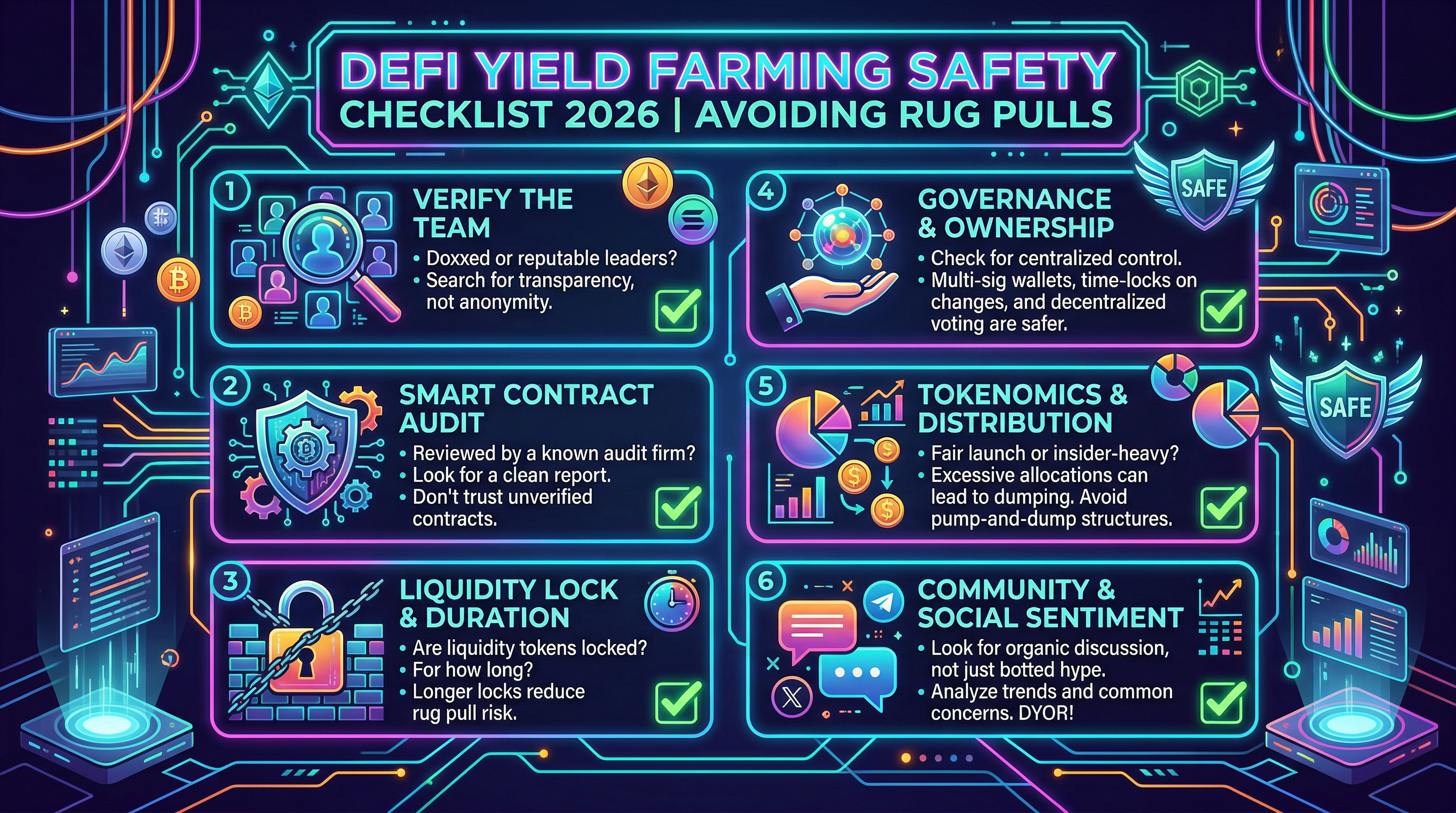
In Q1 2026, three DeFi protocols with combined TVL of $47 million were drained through a combination of a smart contract exploit, a governance attack, and an old-fashioned rug pull. Each time, Twitter was full of people saying "I saw the red flags but ignored them." I've been systematically building a DeFi safety checklist since 2022 — it's saved me from three near-misses in the past 18 months. Here's the full framework.
DeFi yield is real. 8%, 15%, even 30% APY is legitimately achievable on audited, established protocols. But for every legitimate yield opportunity, there are five scams designed to look identical to the real thing. The checklist below is non-negotiable before any new DeFi deposit.
Red Flag #1: Unaudited Contracts
Never, ever deposit into a protocol that hasn't been audited by a reputable security firm. Full stop. No exceptions. An audit is the minimum viable security bar, not a guarantee. The top audit firms in 2026:
- Trail of Bits: The gold standard. Used by Uniswap, Ethereum Foundation, and major protocols.
- Spearbit: Cutting-edge DeFi-specific security. Post-Hack-Spearbit research teams are ex-white-hat hackers.
- Certik: Most common audit firm — has a mixed track record (several audited protocols were exploited), but absence of Certik audit is worse than having it.
- OpenZeppelin: Trusted for protocol standards. Audits many ERC-20/721 standard implementations.
How to verify: Go to the protocol's documentation or GitHub and find the audit report PDF. If you can't find a publicly available audit report, the protocol is unaudited. Do not deposit.
Red Flag #2: Anonymous Team Without Track Record
Anonymous teams aren't automatically scams — many legitimate DeFi projects (early Uniswap, SushiSwap, etc.) launched anonymously. But anonymous teams are a material risk factor. A team that's identifiable has legal accountability and reputational stakes. An anonymous team can disappear overnight with your funds and face zero consequences.
Due diligence on teams: Are team members doxxed (publicly identified)? Have they built anything before? Can you find their LinkedIn, Twitter history, GitHub contributions? Any previous projects they worked on that you can evaluate? Anonymous team + new project + no prior track record = high risk.
The February 2026 rug pull I tracked in real time had all the classic warning signs: anonymous team, 4-week-old protocol, 10,000% APY in "LP incentives," and an audit from an obscure firm with zero history. The yield was so high it should have been an obvious red flag — but fear of missing out (FOMO) caused people to deposit anyway. High yields that seem impossible are always buying your acceptance of hidden risk. If you can't explain where the yield comes from, don't deposit.
Red Flag #3: Impossible Yields
Sustainable DeFi yield comes from:
- Protocol fees (trading fees, interest paid by borrowers) — usually 2–15% APY
- Staking rewards from protocol inflation — varies widely but decreases over time
- Real-world asset yields (Treasury rates, private credit) — currently 4–14% APY
When a protocol offers 500%, 1000%, or "unlimited" APY, ask: where does this yield actually come from? In almost every case, it's pure token inflation — the protocol is printing its own token and distributing it to depositors. The APY is only meaningful if the token price holds. Token prices of new protocols almost never hold after initial inflation distribution. The yield destroys itself.
Red Flag #4: Insufficient TVL and Age
Time in operation is one of the best security proxies available. A protocol that has held $500M TVL for 3 years without a major exploit has an established track record. A protocol launched 3 weeks ago with $2M TVL has zero meaningful security history.
Rule of thumb for new protocols: don't deposit more than you can afford to lose entirely. Treat it as a speculative position, not a yield position. As TVL grows, as audits stack up, and as time passes without exploits, gradually increase exposure.
Trade Crypto Smarter
Traderise gives you multi-asset access, real-time portfolio tracking, and low fees. Built for degens who want an edge.
Try Traderise FreeRed Flag #5: Centralized Admin Keys
Can the protocol admin upgrade the contract, change parameters, or withdraw funds without any timelock or governance vote? This is the "rug pull" attack vector — developer drains protocol through a privileged function. Look for:
- Timelocks on admin actions: Any admin change should require 24–72 hours of public notice so users can exit before implementation.
- Multisig requirements: Admin functions should require 3/5 or 4/7 multisig from known parties, not a single admin key.
- Governance-controlled upgrades: Mature protocols have all upgrades go through governance votes with adequate notice.
How to check: Look at the protocol's smart contracts on Etherscan. Check the contract's admin/owner address. Look for upgrade functions and their access controls. If a single EOA (externally owned account) can upgrade the contract at will, that's an immediate red flag.
The Complete DeFi Safety Checklist (2026 Edition)
- ☐ Protocol has been audited by a recognized security firm (audit report publicly available)
- ☐ Protocol has been live for 6+ months without major exploit
- ☐ TVL is significant enough to attract serious security researchers (ideally $50M+)
- ☐ Team is doxxed or has verifiable track record
- ☐ Yield source is understandable and sustainable (not pure token inflation)
- ☐ APY is within reasonable bounds (<50% for new protocols, <200% is suspicious for any protocol)
- ☐ Admin functions have timelocks and multisig requirements
- ☐ No major unlock cliffs coming for governance/team tokens that could trigger a sell-off
- ☐ Protocol is listed on DeFiLlama's tracked protocols (signals legitimacy)
- ☐ At least 3 independent DeFi security researchers have reviewed the protocol publicly
- ☐ Smart contracts are verified and open source on Etherscan/Basescan
- ☐ Token approvals are for specific amounts, not unlimited allowances
How to Limit Your Blast Radius When You Do Get Rekt
Even with perfect diligence, exploits happen. The way to survive DeFi long-term isn't to avoid all risk — it's to size positions so that any single exploit doesn't destroy your portfolio:
- Position size discipline: No single DeFi protocol should represent more than 5–10% of your total portfolio.
- Use a separate DeFi wallet: Your main long-term holdings should never be in the same wallet as your DeFi positions. If your DeFi wallet gets drained, your cold storage is safe.
- Protocol diversification: Spread across 5–10 protocols rather than concentrating in one.
- Review approvals monthly: Use Revoke.cash monthly to audit and revoke unnecessary token approvals from wallets you've used in DeFi.
I track all my DeFi protocol exposure alongside spot holdings on Traderise's portfolio dashboard — when I know my total portfolio allocation to high-risk DeFi vs. safer holdings, I can enforce position size discipline systematically instead of just hoping I've been careful.
Build Your DeFi Portfolio the Smart Way
Traderise gives you the portfolio tracking and multi-asset access to manage DeFi exposure safely alongside your spot crypto holdings. Know your risk at all times.
Try Traderise Free